Purposeful camera placement
Coverage is planned around entries, driveways, yards, access points and vulnerable areas to reduce blind spots and wasted views.
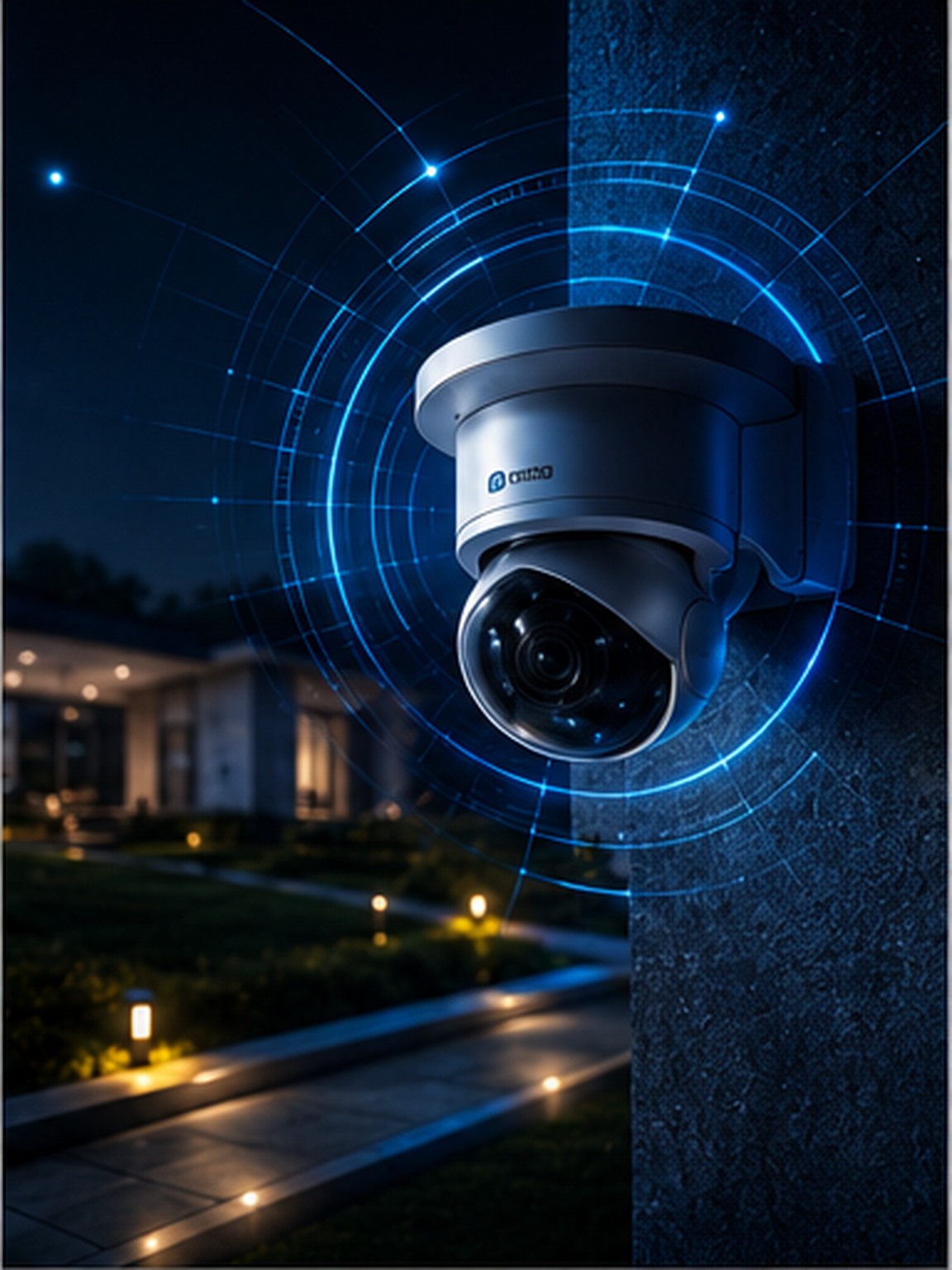
Professionally positioned cameras, dependable network infrastructure and remote viewing work together to make surveillance useful instead of merely visible.
A surveillance system is only as good as the views it captures. Camera selection, lens angle, mounting height, lighting, network bandwidth, recording strategy and remote access all matter. Hub Electric approaches surveillance as a complete system rather than a set of cameras mounted wherever space happens to be available.
Coverage is planned around entries, driveways, yards, access points and vulnerable areas to reduce blind spots and wasted views.
The network and recording hardware are sized so cameras can operate continuously without competing with the rest of the smart-home system.
Configured remote access lets homeowners check live views and recorded events from compatible devices when they are away.
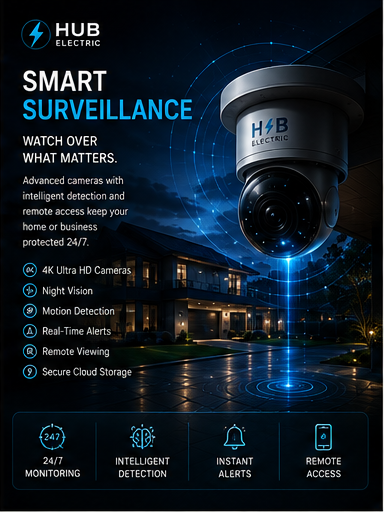
Cameras give homeowners a record of what happened around the property, whether the event is a delivery, vehicle, visitor, wildlife encounter or security concern.
Properly configured detection zones and event rules can help focus attention on meaningful activity rather than generating constant nuisance alerts.
Remote viewing allows the homeowner to check the property from work or while travelling, providing context before deciding whether an event needs attention.
Professional integration is a sequence: design the infrastructure first, install it cleanly, then configure and test the finished system under real operating conditions.
Camera positions are selected based on field of view, height, lighting, weather exposure and the areas that actually need identification or overview coverage.
Low-voltage cabling, network switches, recorder locations and power requirements are installed cleanly and protected. Where practical, wired connections are preferred for fixed cameras because they provide predictable bandwidth and power.
Recording schedules, event zones, remote access and image settings are configured. Each camera is then checked in daylight and low-light conditions so the finished system performs in the situations that matter.
Consumer cameras can be useful, but a professionally designed system is built around coverage, infrastructure and reliability. The goal is not simply to own more cameras. It is to capture the right image, store it dependably, access it securely and integrate surveillance with the rest of the home’s network and control environment.
DISCUSS YOUR PROJECT ↗