Distributed sensors
Sensors can be placed at high-risk locations throughout the home so a small amount of water can be detected close to the source.
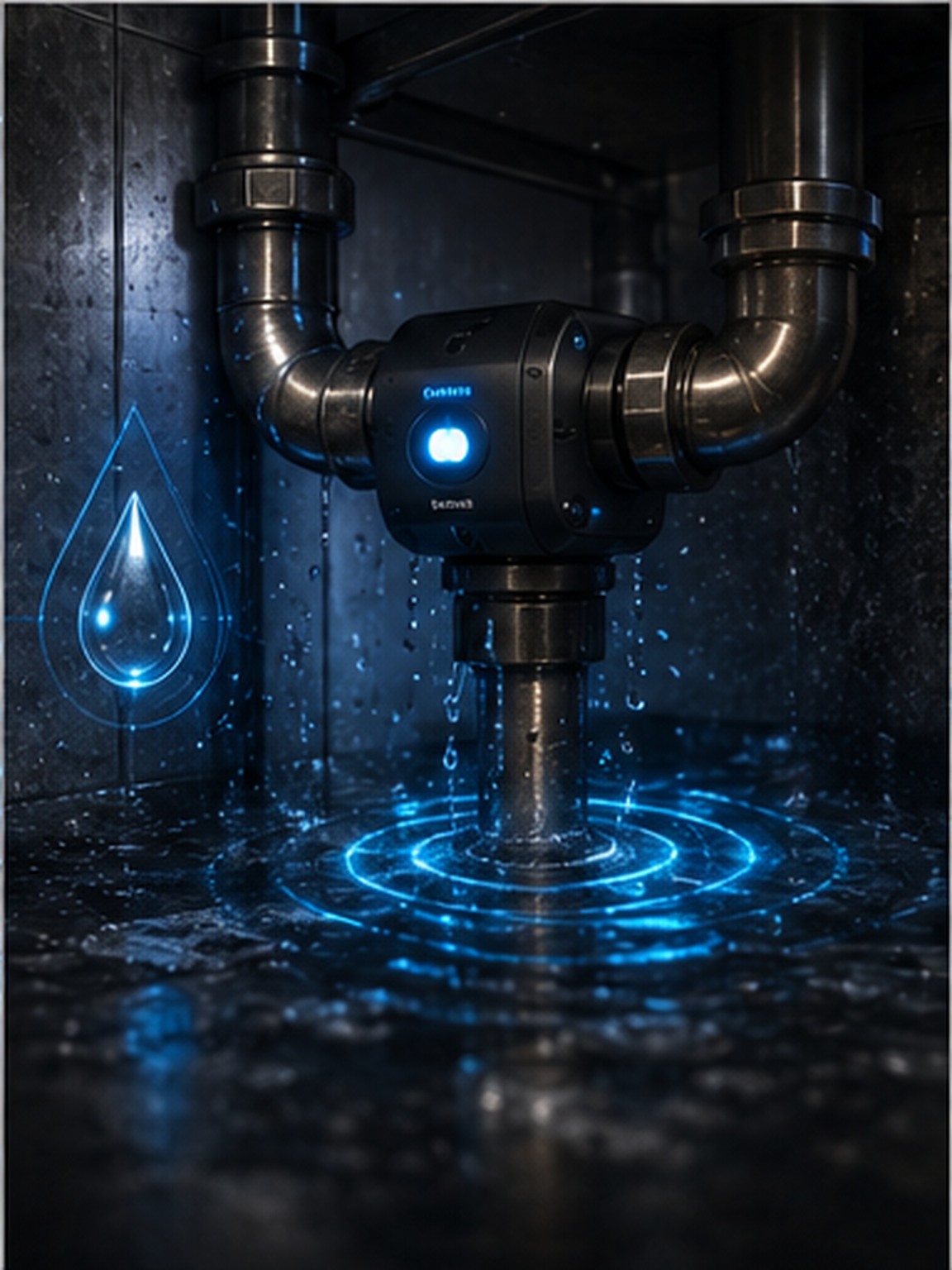
Strategically placed sensors and compatible automatic shutoff hardware can turn a hidden leak into an immediate event instead of a discovery made hours or days later.
Leaks often begin in places nobody is watching: under sinks, behind appliances, beside water heaters or in mechanical rooms. Smart leak protection adds a detection layer to those vulnerable points and can be designed to notify the homeowner quickly or, with compatible equipment, trigger automatic water shutoff.
Sensors can be placed at high-risk locations throughout the home so a small amount of water can be detected close to the source.
Where compatible shutoff hardware is installed, a leak event can be used to close the main water line without waiting for someone to be physically present.
Connected monitoring can alert the homeowner while they are away, reducing the time between the start of a leak and the response.
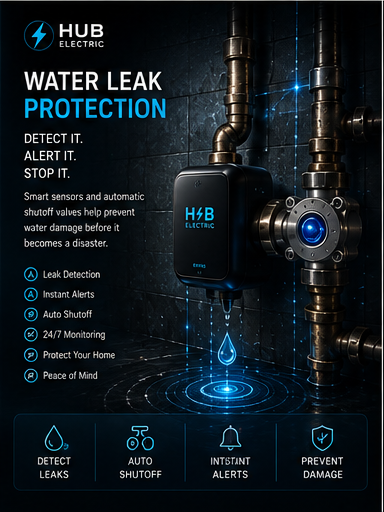
Small sensors can remain in hidden or rarely visited areas continuously, creating awareness without requiring routine manual checks.
A complete system can do more than sound an alarm. It can notify users, expose the location of an event and coordinate a shutoff response when supported by the installed hardware.
The system remains active when the house is empty, which is precisely when an unnoticed leak has the greatest opportunity to cause extensive damage.
Professional integration is a sequence: design the infrastructure first, install it cleanly, then configure and test the finished system under real operating conditions.
Water heaters, laundry equipment, dishwashers, sinks, mechanical rooms and other plumbing zones are reviewed so sensor coverage targets realistic failure points.
Sensors are positioned where water will reach them early. If automatic shutoff is part of the design, suitable valve hardware is installed on the appropriate water line and integrated with the control system.
Notifications, automation rules and valve behavior are configured, then each sensing point is tested. The homeowner is shown how to identify an event, restore the system and respond safely.
The cost of a leak is often determined by time. A small fitting failure can become damaged flooring, drywall, cabinetry and contents if it runs unnoticed. Smart leak protection cannot prevent every plumbing failure, but it can dramatically improve awareness and give the home a way to respond while nobody is watching.
DISCUSS YOUR PROJECT ↗